
Learn Lyme+
Lyme disease is the most common vector-borne illness in the US, and one of the most misunderstood. "Lyme+" refers to Lyme disease and its associated co-infections. Standard coverage barely scratches the surface. Start here to begin understanding the big, complicated picture.
What is Lyme and tick-borne disease (Lyme+)?
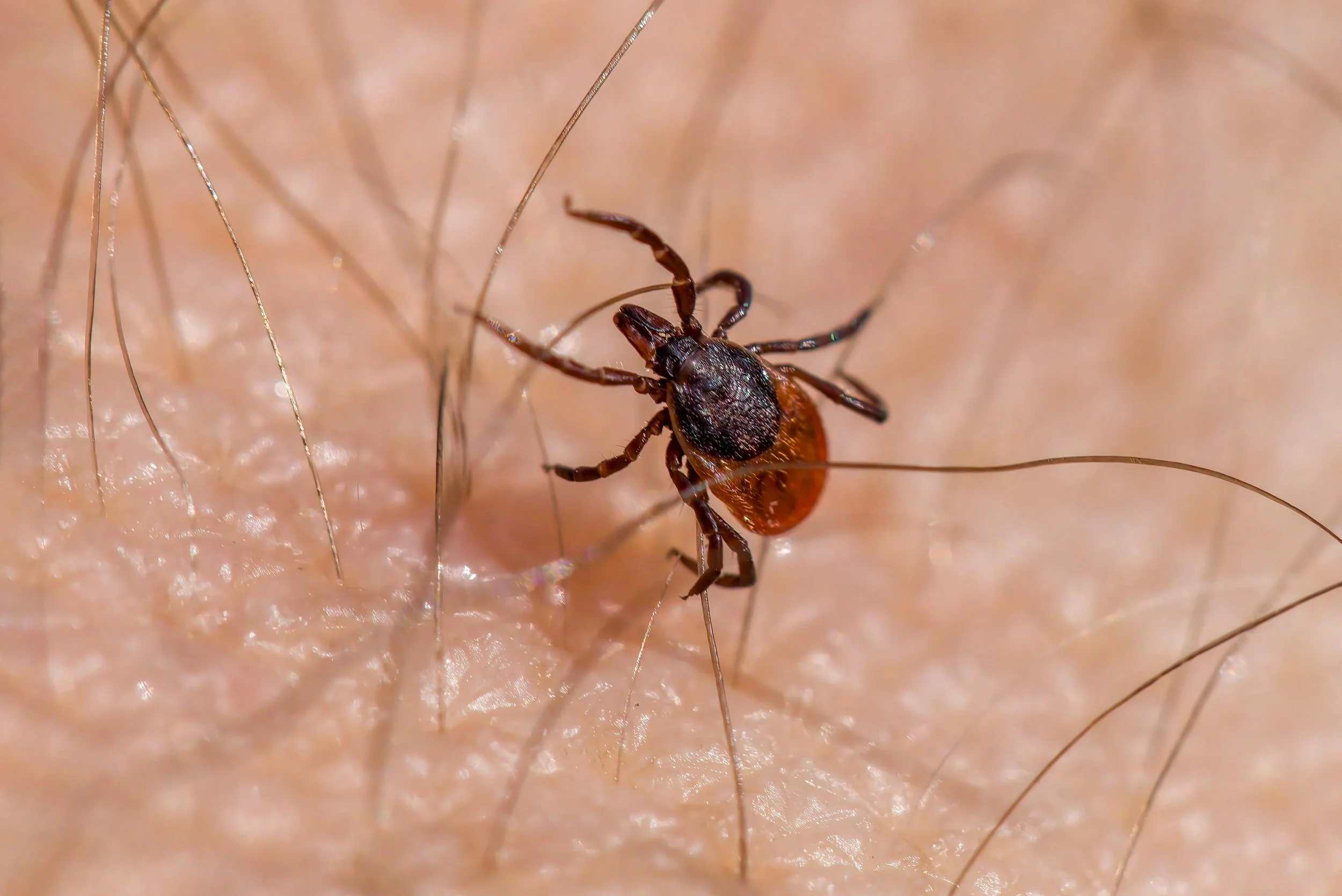
The corkscrew-shaped bacteria responsible for Lyme disease specifically is called Borrelia burgdorferi. While commonly transmitted through the bite of an infected tick, usually a blacklegged tick or deer tick, most people never know they were bitten. An infected tick often transmits more than one pathogen at once. This is why we use the term "Lyme+” to include all the tick-borne illnesses that layer on top of each other, making diagnosis even more complex. Early signs of infection may include a rash, fever, headache, and fatigue. Left untreated, the infection can become systemic, spreading to the joints, heart, nervous system, and more
What Lyme+ actually is
Lyme is caused by bacteria from a tick bite. Infected ticks often carry multiple pathogens, which is why we use "Lyme+" to capture the full range of tick-borne illness. Early signs include rash, fever, and fatigue.
Blog

I have no idea what Lyme disease is…
If you are new to this complicated disease, start here.
Documentary
The Quiet Epidemic
Award-winning film on the history of Lyme disease.
Organization websites.

LymeDisease.org
Trusted patient-advocacy org with evidence-based sources.

Project Lyme
Beginner-friendly, education-focused nonprofit.

Lyme Warrior
Patient-led nonprofit with education and community events.
What mainstream science says
The CDC offers a baseline on Lyme statistics. Lyme-literate clinicians have documented gaps around chronic symptoms, diagnostic accuracy, and treatment options.
Blog
The Lyme Literacy Gap
An analysis based on research conducted at the ILADS conference.
10 Things You Should Know About the New IDSA Guidelines
Lyme-literate critique of current IDSA Lyme guidelines.
Government website
CDC — Lyme Disease Basics
Government baseline useful for stats, but not Lyme-literate.
Organization websites

Lyme Disease Diagnosis: Key Steps and Challenges
Why Lyme is often missed or misdiagnosed.
Heard from people living with Lyme+
Patient stories, podcasts, and community accounts offer the clearest window into real life with Lyme+. These are voices from people who have lived it.
Organization website
LymeLnk Patient Stories
Patient stories & Lyme community insights.
Podcasts

Tick Boot Camp Podcast
Patient storytelling & expert education to build community.
Lyme+ by Global Lyme Alliance
Lyme interviews with experts & patients .
Book
But You Look Fine — Amy Kurtz
Health coach & patient advocate on healing from chronic illness.
Co-infections & related conditions
A single bite can transmit multiple pathogens. Bartonella, Babesiosis, MCAS, Alpha-Gal Syndrome, and POTS commonly occur alongside Lyme+, adding diagnostic complexity.
Organization websites
Tick-borne Co-infections
Overview of common co-infections like Bartonella & Babesiosis.
Gastrointestinal Symptoms of Lyme Disease
How Lyme+ impacts gut & immune health.
Mast Cell Activation Syndrome (MCAS)
MCAS symptoms, diagnosis & overview.
Article

Alpha-Gal Syndrome — Univ. of Virginia
Overview of a tick-borne disease that triggers a severe allergy.
Podcast
Chronic Mold Illness & Lyme
A disorder from the dysfunction of the autonomic nervous system.
Research
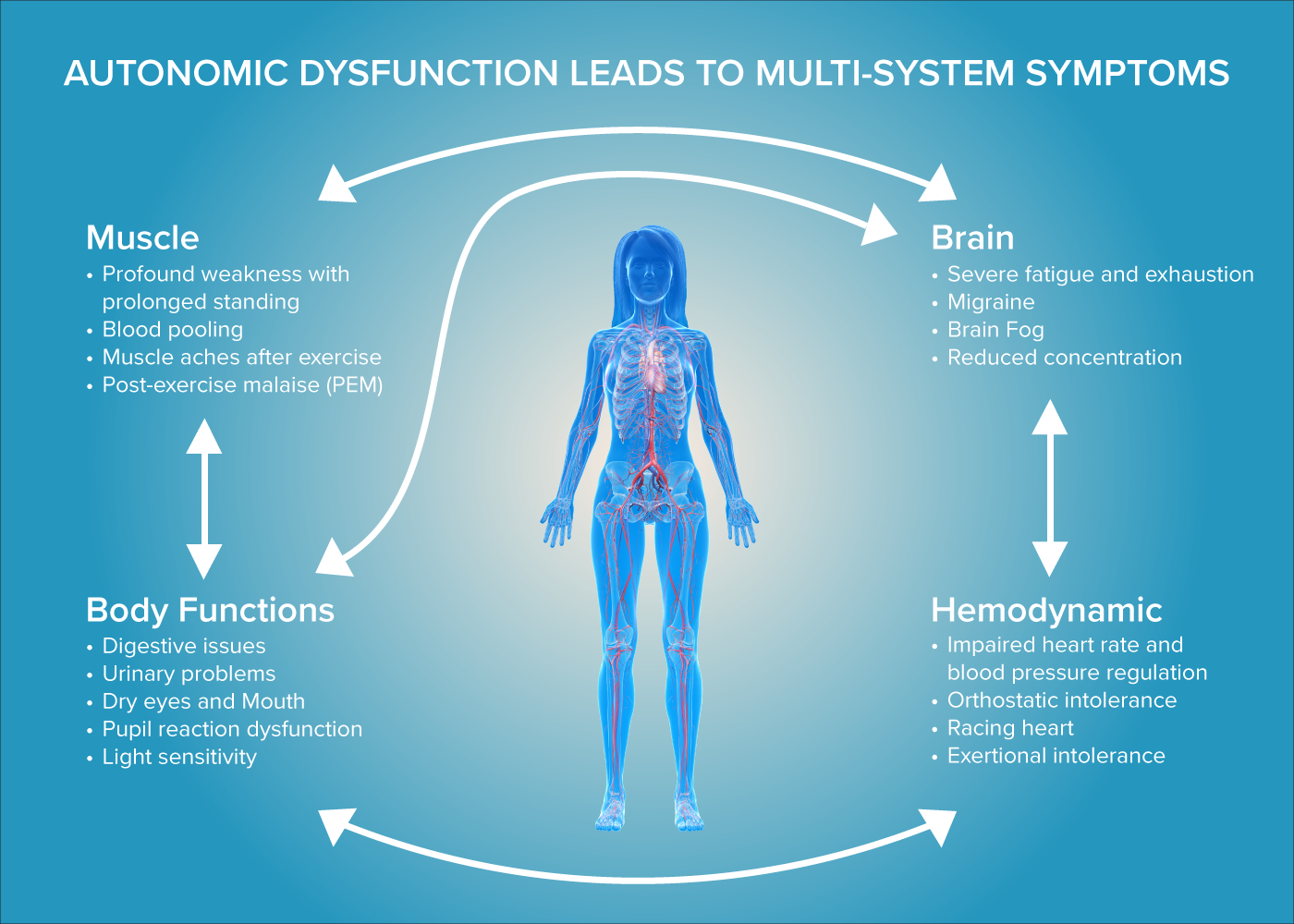
Could POTS be the hidden cause of your persistent Lyme disease symptoms?
A disorder from the dysfunction of the autonomic nervous system.
How do I prevent ticks and bites?
Ticks are everywhere, and most people don't realize when they've been exposed. And, there are misconceptions that ticks are only in certain regions or rural areas, but with climate changes, they’re in all 50 states, in as urban of areas as New York City... But don’t be afraid—knowledge is power. Precautionary awareness, habits, and tools can dramatically reduce your risk of tick-borne disease.
How to avoid ticks & bites
Ticks are present in all 50 states, including urban areas like NYC. Treating clothing with permethrin, thorough tick checks, and knowing high-risk environments are effective starting points.
Guide
How do I prevent ticks & bites?
Complete guide to avoiding ticks & preventing bites.

CDC: Preventing tick bites in yards
Practical yard tips to reduce tick exposure.
Products

CDC: Permethrin Clothing Treatment
Effective spray treatment for clothing.

TiCK MiTT
Chemical-free mitt for removing ticks from people & pets.
How to protect your pets
Pets spend time in tick habitat and are often first contact. Regular checks, vet-recommended preventatives, and safe removal protect pets and people. Vaccines are available for dogs in higher-risk areas.


Tick activity near you
Tick presence varies by region, season, and environment. Tools from the University of Rhode Island, Fordham, and Johns Hopkins let you check current activity and risk by location.
Sites & Tools

TickEncounter — University of Rhode Island
A map tool by University of Rhode Island to track ticks & risk.

Tri-State Tick Risk
Fordham’s weekly estimate of risk of tick bite in NY, NJ, & CT.

Tick & Tick-borne Disease Data Explorer
Interactive map of ticks & tick-borne disease by Johns Hopkins.
Found a tick? here's what to do
Remove promptly with fine-tipped tweezers, pulling steadily upward. Save the tick for lab testing. Monitor for symptoms and contact a provider if a rash, fever, or flu-like symptoms develop.
Guide
I Found a Tick. Now What?
Step-by-step guide for when you find a tick or bite.
Testing Labs

Ticknology
Mail-in laboratory tick testing with tracking database.

Tick Research Lab of Pennsylvania
Tick analysis & testing; free for PA residents or $50-100.
MilTICK
Free tick testing for military personelle & families.

Illinois Natural History Survey Medical Entomology Lab
Free tick identifications for IL residents & visitors.
NJ Ticks for Science
Rutgers-led citizen project tracking NJ ticks.
Upstate Tick Testing Laboratory
Testing in Onondaga County; $10+ for residents, $20+ other.
How do I spot symptoms and diagnose Lyme+?
Symptoms to pay attention to
Early signs include bulls-eye rash, fever, fatigue, and joint pain. Later-stage Lyme+ can affect the nervous system, heart, and cognitive function.
Guide
How do I spot symptoms & diagnose Lyme+?
Guide to recognizing symptoms & approaching diagnosis.
Tools & Checklists

Dr. Horowitz MSIDS Questionnaire
Multiple systemic infectious disease syndromes (MSIDS) quiz.
LymeDisease.org Symptom Checklist
=Clear public-facing symptom checklist & testing primer.
Articles & Guides
Lyme Disease Symptoms by Daniel Cameron, MD
Insights from an LLMD on symptoms & diagnosis.
Community

Patient Support
Lyme-focused Instagram support community.
Find a Lyme-literate provider
Lyme-literate providers diagnose and treat the full range of Lyme+, including co-infections. Patient-vetted directories and telehealth options make access feasible regardless of where you live.
Provider Directories

ILADS Provider Directory
=Directory of Lyme-literate doctors based on ILADS standards.
LymeDisease.org Physician Directory
Patient-vetted LLMD directory with notes from patients who have actually seen these providers.
Telehealth & Tools

Ravel Health: Lyme-literate Telehealth
Affordable telehealth with Lyme-literate providers.

LymeLess AI Navigator
Personalized tools, AI-powered support, & expert guidance.
Understand your testing options
Standard FDA-cleared tests miss up to 78% of early cases. Specialty labs like IGeneX and Vibrant Wellness offer expanded panels with higher sensitivity.
Research
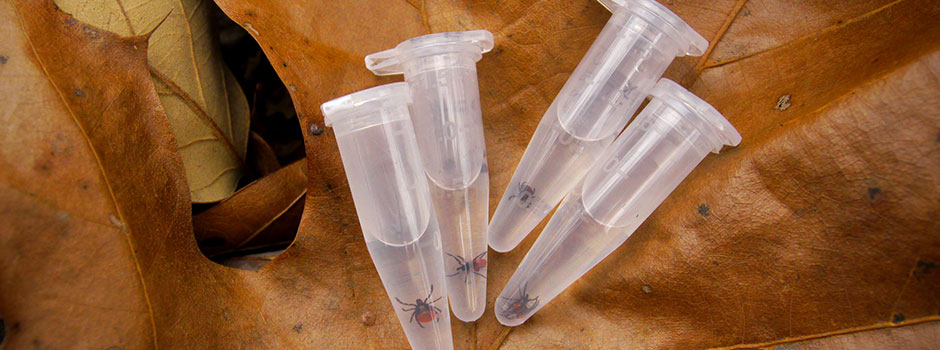
FDA-Cleared Lyme Tests Miss 64–78% of Early Cases
A 2026 study on the standard test most doctors rely on.
Lyme Testing Insights by Daniel Cameron, MD
LLMD on testing nuance, false negatives, & mainstream guidelines.
Specialty Labs
IGeneX
Coinfection panel, ~double sensitivity of standard test.

Stony Brook
Modified 2-tiered test, higher sensitivity to detect early.
Vibrant Wellness — Tickborne 2.0
Measures immune response & germs for Lyme & coinfections.

Galaxy Diagnostics
Direct & indirect detection via PCR, urine, & IFA panel.

The Heal Hive Lab Roadmap
Lyme-literate list of labs to test for diagnosis.
Options for testing on a budget
The Lyme Test Access Program provides financial aid for specialty testing. FQHCs offer sliding-scale fees, and some clinical trials include free evaluation.


Getting diagnosed is often the hardest part. Standard testing misses a significant percentage of real infections, and many medical systems are not considered Lyme-literate. These resources help you advocate for yourself—not medical advice.
How do I treat and manage Lyme+?
Treatment options beyond antibiotics
Antibiotics are a common starting point. For persistent cases, Lyme-literate providers use herbal protocols, immune support, and ILADS guidelines for co-infection treatment.
Articles & Guides

ILADS Treatment Guidelines
Evidence-based Lyme treatment guidelines.

RawlsMD Treatment Comparison Guide
Herb-focused, integrative guide from a Lyme-literate MD.
Books

How Can I Get Better? By Dr. Horowitz
Lyme-literate treatment guide through the MSIDS framework.
Organizations
Bay Area Lyme Foundation Treatment Research
Research-funding nonprofit’s information on treatment.
Global Lyme Alliance — Treatment Research
Treatment guidelines by nonprofit funding research.
Programs
The Heal Hive Recovery Program
Step-by-step program for Lyme & related conditions.
Financial help for treatment
LymeLight Foundation offers grants for patients ages 4–25. The Lyme Disease Treatment Foundation covers the US, Canada, UK, and Germany. Ravel Health offers affordable telehealth.
Grants & Assistance
LymeLight Foundation
Lyme treatment grants for young patients age 4-25.
Lyme Disease Treatment Foundation
Medical treatment grants in the US, Canada, UK & Germany.
Telehealth
Ravel Health: Affordable Telehealth
Affordable telehealth with Lyme-literate providers.
Discounts
Lyme Warrior Patient Discounts
Curated discount list for Lyme patient needs.
@LymeAdvise Patient Discounts
Discount codes tailored for Lyme patients.
Lyme+ research today
Johns Hopkins, MIT, Columbia, Tulane, and Mount Sinai are actively researching Lyme+. MyLymeData and the Lyme Disease Biobank let patients contribute directly to that work.
Patient Research

MyLymeData
Patient-led registry; data on diagnosis, treatment, etc..
Lyme Disease Biobank
Donate Lyme blood, urine, & tissue for research.
Research Institutions

Johns Hopkins Lyme Research
Clinical & research team to understand Lyme & manifestation.
MIT TAL Research Group
Research group focused on chronic Lyme & Long COVID.

Tulane National Biomedical Research Center
Persistent Lyme research through primates & ticks.

Columbia Lyme & Tickborne Diseases Research Center
Academic research on chronic aspect; runs clinical trials.
Mount Sinai Cohen Center for Recovery from Complex Chronic Illness
Treats & studies infection-associated chronic conditions.
Community & support: you're not alone in this
Support groups, podcasts, books, and advocacy organizations connect people navigating Lyme+. These resources are built by people who understand it from the inside.
Support Groups
Generation Lyme
Peer support group with Zoom meet-ups at least 5x/week.
San Diego Lyme Alliance Empowerment Circle
Peer-led support group, based in but not exclusively SD.
Podcasts

The Alpha Gals
Patient-hosted podcast on Alpha-gal & tick-borne illness.
Tick Chicks
Interview-based podcast on life with chronic illness.
Tick Boot
Patient storytelling & expert education to build community.
Books
Kicking Sick, by Amy Kurtz
Empathetic guide for thriving with chronic conditions.
Advocacy
Center for Lyme Action
Advocacy org growing tick-borne disease federal funding.
A Lyme+ diagnosis is the beginning of a new set of questions — not the end. Treatment paths vary widely. Financial barriers are real. Community matters more than people expect.
Learn More on Our Blog